Your Brief Future
The Marketing Brief in Our New Real

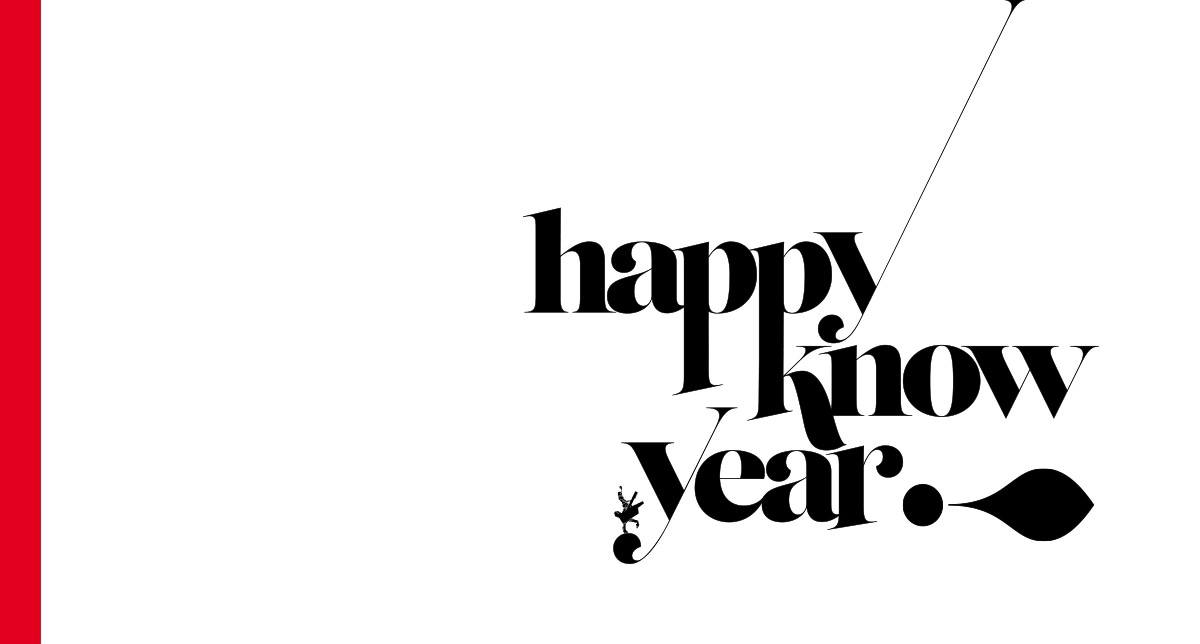
Your Brief Future
To say that there was a start to the problem of the collapse of the brief is to not admit that its deterioration hasn't been a slow and purposeful effort. The brief has always been a begrudged necessity - an excuse for creatives and a pain for those who create it. But all grudgingly admitted its importance. That is, until those who knew its importance and art became fewer than those with less experience and wisdom that replaced them. Nobody likes a brief, but nobody understands exactly how important it is until it's gone. And once we arrived at the point where the creative team were the ones rewriting and researching from both client and account team, it was time to admit something had been irretrievably lost. Not just knowledge, but the very ability to imagine what isn't already there.
There's a dysfunction in desire, and we're all pretending not to notice.
The client brief isn't dead because we killed it. It's dead because we've forgotten how to want things. Real things. Messy things. Human things. In our rush to optimize everything, we've optimized away our ability to articulate desire. And in that forgetting, we're watching creativity itself flatline, replaced by the efficient mediocrity of prompts and best practices. As we look at the latest Christmas work from Coca-Cola, a direct redux of years and "Holidays are Coming" in AI, it's a same, but different, but not good different situation, but a perfect example of the derivative nature of AI, but this time with the same boring brief - what's next, "Hill Top", but with AI - sorry guys, but you were strong out of the gate with the tech, but your new theremin only plays one tune, the way you're using it.
The Death of Desire
Of course we can't just blame the big red brand for this one, we can look only a few weeks back to the IPG + Omnicom collision. We're living in the golden age of efficiency and the dark age of want. Every agency has the same tools, same processes, same AI-driven insights. But faster execution of hollow ideas is still hollow and the truth is that while you might be getting 10 options, they took just as long to get to as the 2 good ones that came with informed direction and understanding. We've replaced genuine desire with algorithmic "should," traded human truth for data points, and forgotten how to read the space between what people say they want and what makes their pupils dilate. The truth lies in the space between their curated social self and their persona obscura - that shadow self that actually drives desire. And with less to work with and more to know, the amalgam of generated noise speaks nothing, even if played at the volume of quadraphonic bullshit.
The Kingdom of the Knownothings
Look around. There's an expectation that we can build leaders who follow but can't read people. Who understand best practices but not desire. It's a generation that can't make small talk but can follow process, who's afraid to fuck but will spend hours optimizing their dating app. While agencies are given less time and fewer resources to deliver, we’re left with untrained poseurs grasping to articulate the basic directions of technique to churn prompts to fake real thinking, real feeling, real creativity. They know what they're supposed to want, but not what makes even themselves really care. Clients get their decks full of data but can't see the truth hiding in plain sight about people they can only see as their surfaces or worse, themselves. And while they know that they need to build a Powerpoint, they're too self-conscious to actually give direction or share opinions beyond the nuts and bolts of what they've been told they need (or stolen from an old deck) - no idea what they want or even why anyone else would want it.
The Creative Collapse
When you can't say what you want, you can't make what matters. The brief was never just a document - it was a translation of desires, details and some feeling about feelings and current situations into direction, hopes and measures. But we've lost that language. Lost that ability to turn human want into creative fuel. And all the AI in 3-Mile Island can't save us if we don't know what we're trying to save.
That Creative Director that seemed worth replacing with two juniors, actually had the language and experience to prompt with cinematic language and executional references. As their experience and way to think disappears, the ability to reference even the past is disappearing. And all the tech and bodies to push it, won't be able to speak to real humans when nobody at the originating end knows how to speak without limits.
We've gradually pared down marketing executions to the tools, but not the knowledge to use them as only elements of the efforts and not the singular solutions. This without the original human 'prompt' of a brief, leaves but a void and a logo.
The Way Forward
The beautiful irony: in a world drowning in data and dying of efficiency, the future belongs to those who can read desire before it becomes a deliverable. Not another agency promising faster turnarounds, but a way that lives in the space between what clients think they should want and what makes their hearts race. In the blurred edge beyond the line that separates their public and private personas and that of their audiences too. Sometimes asking and talking is the best way to start, and knowing yourself isn't quite as strong as letting someone else know your "persona obscura" just enough to see real desire.
When Bob Hoffman talked about the "Three-Word Brief", it brings the chance of wonder, but that's only a promise from the past when such responses and resources were available to fill in everything between Make, Us and Famous. We now need more of everything including the truths of reasons as our creative generation now needs more information and longer directions with more of a purity to combat the failings found in their own situations. The brief must do more and find more truth because while it was always the most important in that it was the start, it is now the very everything that allows anyone to understand. The confounding new wisdom is that the brief might be the most important creative element of the entire damned process.
The Brief History of the Future
Brilliance, bombast, and beauty is the brief of purity. It is the truth lost and the truths found. It is more than the perfunctory because, in our new reality, it is the most important element. Not because it leads to better marketing. Not because it wins more awards. But because it gives brands and their practitioners - the marketers who have become mere mouthpieces - the chance to claw back their ownership and self. The chance to connect, the power to transcend the shelf into self, the ability to turn make-believe into make-believers in every space and vapor where marketing now lives.
There is a way to pause and refresh the real intent and insights, but it takes time away from the screen and looking instead into ourselves (again). Yes, research may be a first step, but only as it leads to the social self and sociology of real conversation and the questions before the brief and not after. It becomes about listening again and not only to social media, but to ourselves. And there is a place for AI, but as the tool to help refine and see the cracks and commonalities (especially from live groups) and identify those things that will get us to the desired outcomes and not identify specifically how to get there.
There is a Brief Conversation™ that might be the future of the client brief. One that can take us back to understanding while moving us forward. But it takes a new step.
It’s Brief.
We see a brief future. One where consultancy connects client to constituent, region to retail, brand to beating eyes. There's a place and time that's about the brief and for the people that build it before it even becomes an assignment. We want to help make the brief and find the desire. Whether you work with us on the creative or not.
It's become unusual to receive a simple offer of 'help', but helping someone find themselves and their voice is as instinctual to me and us as helping you find your house keys. And I suppose, that's why we made 'A Brief Conversation™'. Because we just want to get you back home.
In the end, someone needs to remember how to read human truths, someone needs to know not just how to translate desire into direction, but to dig out the desire and bring force against the systemic failings. Someone needs to make the brief breathe again.
And we can get started not with just a meeting, but a chat over a coffee, cocktail or whatever casual setting - it's me, so we can go out for a bike ride. We don't just want to help you find your future, but help get you on the way.